Albany sits on the shores of King George Sound on Western Australia's south coast, and the Great Southern region spreads out around it: granite headlands and sheltered bays, wine country around Mount Barker and Denmark, tall forests towards Walpole and two very different mountain ranges, the Stirlings and the Porongurups. It's cooler and greener than much of the state, and it has more history than almost anywhere else in WA.
This guide explains how to get there, what to see around Albany and the wider region, and how to travel safely on a spectacular but sometimes dangerous coast.
1826
First European settlement in WA
At King George Sound
~420 km
From Perth
About five hours by road
1914
Anzac convoys
Gathered in King George Sound
Getting there
Most visitors drive from Perth on the Albany Highway, a straightforward route of about 420 km through farming country. An alternative is to drive down through the South West via Margaret River and the forests of Pemberton and Walpole, then along the coast to Albany. That route takes longer, but it makes a great loop. Regional flights connect Albany with Perth.
Albany's history
The Menang Noongar people have lived around King George Sound for many thousands of years. In 1826, a British military outpost was established at the Sound, making Albany the first European settlement in Western Australia, a few years before the Swan River Colony at Perth.
Albany became an important port for ships sailing between Britain and the eastern colonies. In 1914, the first convoys carrying Australian and New Zealand troops to the First World War gathered in King George Sound before sailing for the Middle East. For many of those soldiers, Albany was the last part of Australia they saw. Today the town has a strong connection to the Anzac story, with memorials and a modern interpretive centre on Mount Clarence and Mount Adelaide overlooking the Sound.
The town centre has many historic buildings, and the restored colonial-era sites near the waterfront help tell the story of early settlement.
Whaling history and whales today
For much of the twentieth century, Albany was a whaling town. Australia's last whaling station, at Frenchman Bay near Albany, closed in 1978. The site is now a museum that tells the story of the industry and its workers.
Whales have since returned in growing numbers. Southern right whales come into sheltered bays along the south coast in winter and early spring, often with calves, and humpbacks pass by on their migration. You can see them from headlands or on boat tours in season.
Torndirrup National Park
South of Albany, Torndirrup National Park protects a rugged stretch of granite coast. Its best-known sites are:
- The Gap, a deep chasm in the granite where Southern Ocean swells surge in. A viewing platform projects out over the chasm.
- Natural Bridge, a granite arch shaped by the sea.
- Blowholes, where waves force air and spray through cracks in the rock in big swell.
Coastal walks and lookouts offer views along the cliffs and over King George Sound. Stay behind barriers and off wet rocks. People have been killed by waves on this coast.
Beaches and bays
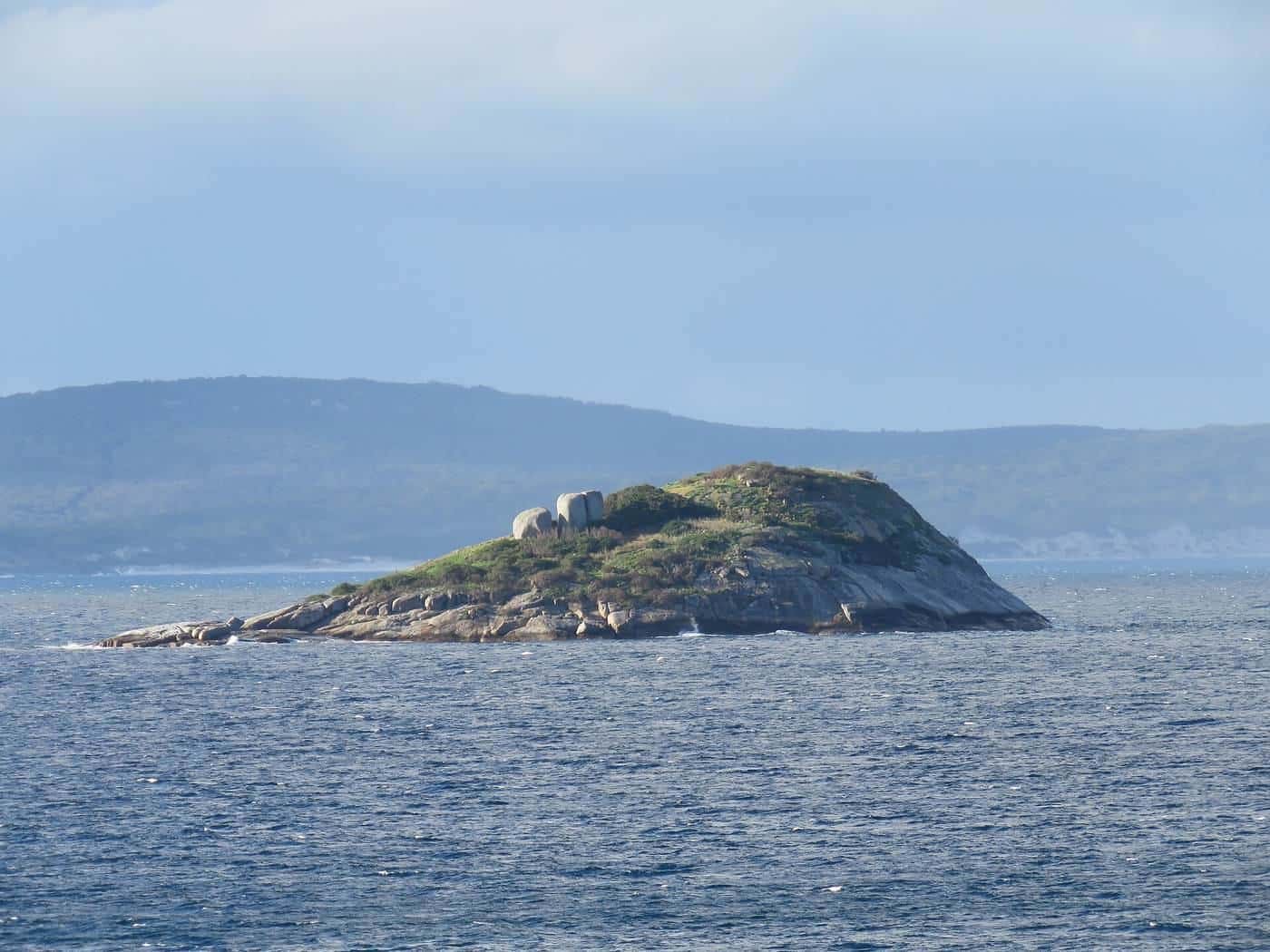
Middleton Beach and Emu Point offer sheltered swimming close to town. Further afield, beaches such as those in Two Peoples Bay and around Little Beach have white sand and clear water against granite boulders. Water temperatures are cool year-round. Check conditions, and only swim where it's safe to do so.
The Stirling Range
About an hour north of Albany, the Stirling Range rises abruptly from flat farmland. Bluff Knoll, at about 1,099 m, is one of the highest peaks in the south of Western Australia. The walk to the summit is steep and strenuous, with spectacular views on a clear day. Weather can change quickly, cloud often covers the peaks, and it can be very cold and windy. On rare occasions, snow falls on the higher peaks.
The Stirling Range is also renowned for its wildflowers. The park is home to a large number of plant species, many found nowhere else. Spring is the main flowering season.
The Porongurup Range
Closer to Albany, the Porongurup Range is an ancient granite range with karri forest on its slopes. The Granite Skywalk, a walkway clinging to the side of Castle Rock, offers wide views. The walk to the skywalk is steep, and the final section involves a short climb.
Denmark and Walpole
West of Albany, the town of Denmark sits among forest, farmland and coast, with a strong arts and food scene. Nearby Greens Pool and Elephant Rocks in William Bay National Park are among the south coast's most photographed spots.
Further west, Walpole is the gateway to the Walpole-Nornalup National Park and the tingle forests. The Valley of the Giants Tree Top Walk lets visitors walk among the canopy of giant tingle trees.
The Bibbulmun Track
The Bibbulmun Track, one of the world's great long-distance walking trails, runs about 1,000 km from Kalamunda in the Perth Hills to Albany. Its southern sections pass through forest and along the coast near Walpole, Denmark and Albany. Many people walk short sections as day walks or overnight trips.
When to go
The Great Southern has a mild climate, cooler than Perth.
- Summer is warm rather than hot, and the best time for beaches.
- Autumn is often calm and settled.
- Winter is cool and wet, but it's whale season.
- Spring brings wildflowers, especially in the Stirling Range.
Pack layers and a rain jacket at any time of year. Bushfire season runs through the warmer months, so check Emergency WA before you travel.
Great Southern trip checklist
0 of 8 done
Ticks are saved in this browser only.
Suggested itineraries
Three days. Explore Albany's history, Torndirrup National Park and nearby beaches, then make a day trip to the Porongurups.
Five days. Add the Stirling Range and Denmark, with time for William Bay National Park.
A week or more. Make a loop from Perth through the South West, forests and south coast, or continue east to Esperance.
Common mistakes
- Climbing Bluff Knoll without warm clothing. Conditions on top can be very different from the car park.
- Getting too close to the edge on coastal rocks.
- Underestimating driving times between attractions.
Food and local produce
The Great Southern is one of Western Australia's main cool-climate wine regions, and its farms produce a wide range of food. Look for farm gates, local markets and cafes around Albany, Denmark and Mount Barker. If tasting wine, organise a designated driver or a tour.
Travelling with children
Albany's sheltered beaches at Middleton Beach and Emu Point suit families, and the town's history sites and short coastal walks keep children interested. Keep children close at clifftop lookouts and blowholes, and choose short, easy walks rather than Bluff Knoll for younger kids.
Key points
Albany is Western Australia's oldest European settlement and a gateway to granite coast, whales, forest and mountains. Allow several days, respect the ocean and mountain weather, and visit in spring for wildflowers or winter for whales.
Frequently asked questions
How far is Albany from Perth?
Albany is roughly 420 km south-east of Perth by road, about five hours of driving on the Albany Highway. Regional flights also link Albany and Perth.
Why is Albany important in Australian history?
Albany was the site of the first European settlement in Western Australia, established at King George Sound in 1826. In 1914, the first convoys carrying Australian and New Zealand troops to the First World War gathered in King George Sound before departing, which is why Albany is closely linked to the Anzac story.
Can I climb Bluff Knoll?
Bluff Knoll in Stirling Range National Park is one of the highest peaks in the south of the state and a popular but strenuous walk. The weather can change quickly, and it can be cold, windy and even snowy near the summit. Check park alerts and the forecast, and carry warm clothing and water.
Are the Gap and Natural Bridge safe to visit?
The lookouts at the Gap and Natural Bridge in Torndirrup National Park have been built to give safe views of the coast. Stay on paths and behind barriers. The granite rocks along this coast are slippery, and large waves have swept people to their deaths.
When can I see whales at Albany?
Southern right whales visit sheltered bays along the south coast in winter and early spring, and humpbacks pass on their migration. Albany's former whaling station is now a museum telling the story of the industry, which ended in 1978.
Is the Great Southern a good wildflower destination?
Yes. The Stirling Range is known for its diverse flora, and spring brings flowers across the region. Look but don't pick, as wildflowers are protected.
Sources and further reading
Facts on this page were checked against these primary and official sources. Conditions change — confirm before you travel or buy.
- Torndirrup National Park — Parks and Wildlife Service WA
- Stirling Range National Park — Parks and Wildlife Service WA
- Bibbulmun Track — Bibbulmun Track Foundation
- Albany, Western Australia — Wikipedia